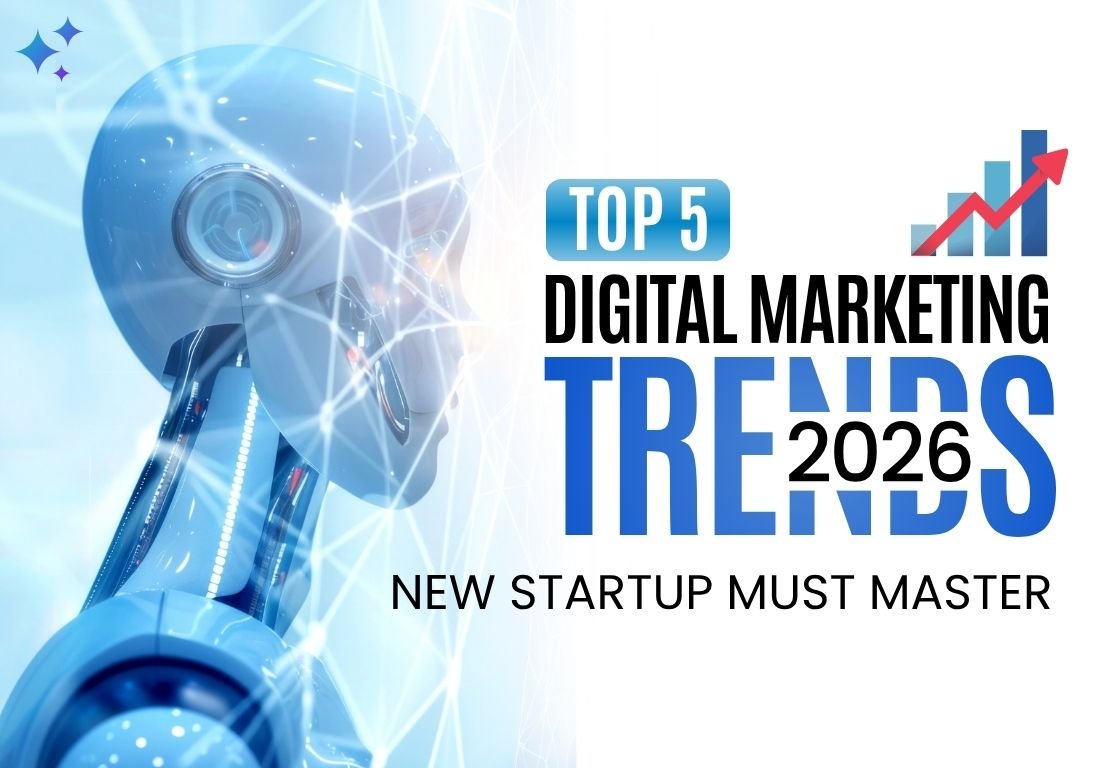
Digital Marketing Trends in 2026: What Brands Need to Know
Digital marketing in 2026 is less about shouting the loudest and more about being useful, personal, and trustworthy. Audiences are savvier, platforms are smarter, and the line between technology and creativity has basically vanished. If 2024–2025 were about experimenting with new tools, 2026 is about mastering them.
Here are the digital marketing trends shaping the year—and how smart brands are staying ahead.
1. AI-Driven Personalization Becomes the Default
AI is no longer a “nice-to-have” marketing tool. In 2026, it’s the engine behind:
Hyper-personalized content
Predictive customer journeys
Real-time website and email customization
Instead of segmenting audiences into broad groups, brands now personalize experiences down to the individual, based on behavior, intent, and context. The brands winning in 2026 aren’t just using AI—they’re training it responsibly and transparently.
Key shift: From “Hello, [First Name]” to entire journeys built uniquely for one person.
2. Search Goes Multimodal (Text, Voice, Image, and Video)
Search in 2026 isn’t just Google + keywords anymore.
Voice search continues to grow through smart devices and in-car systems
Visual search lets users shop and discover via images
AI-powered search engines prioritize answers, not links
This means marketers must optimize content for conversational queries, visuals, and short-form video—not just traditional SEO.
What this means for brands:
If your content doesn’t answer real questions clearly and fast, it won’t surface.
3. First-Party Data Takes Center Stage
With cookies largely gone and privacy regulations tighter worldwide, first-party data is marketing gold in 2026.
Winning strategies include:
Value-driven email and SMS subscriptions
Interactive content (quizzes, calculators, gated tools)
Loyalty programs with real benefits
Consumers are willing to share data—but only when brands are upfront and respectful.
Trust is the new currency. Brands that misuse data don’t get second chances.
4. Short-Form Video Evolves Into “Micro-Storytelling”
Short-form video is still dominant, but in 2026 it’s more polished and purposeful.
Less viral chaos, more brand storytelling
Stronger hooks + clearer narratives
Designed for sound-on and sound-off experiences
Platforms reward content that keeps people watching, not just scrolling.
Trend to watch: Educational micro-content—quick tips, explainers, and behind-the-scenes clips outperform pure entertainment.
5. The Creator Economy Gets More Professional
Influencer marketing has matured into creator partnerships.
Long-term collaborations beat one-off posts
Smaller, niche creators outperform mega-influencers
Creators are involved in product development, not just promotion
In 2026, authenticity isn’t optional—audiences can spot forced partnerships instantly.
Smart brands: Treat creators like creative partners, not ad placements.
6. AR and Immersive Experiences Go Mainstream
Augmented Reality is no longer experimental.
Virtual try-ons are expected in e-commerce
Interactive product demos reduce purchase hesitation
Immersive brand experiences increase engagement and retention
As hardware improves and platforms integrate AR natively, immersive marketing becomes accessible even for mid-sized brands.
Bottom line: If customers can “experience” before buying, conversions rise.
7. Purpose-Driven Marketing Becomes Non-Negotiable
In 2026, audiences expect brands to stand for something—and prove it.
Sustainability claims must be backed by action
Diversity and inclusion need to be visible internally and externally
Empty statements are quickly called out
Purpose-driven marketing works when it’s embedded, not bolted on.
Rule of thumb: If your values disappear during a crisis, they were never real.
8. Automation + Human Creativity = The Winning Formula
Automation handles speed and scale. Humans bring empathy, storytelling, and originality.
The best marketing teams in 2026:
Automate execution and optimization
Spend human time on strategy, creativity, and emotional insight
It’s not AI vs humans—it’s AI powered by humans.
Final Thoughts
Digital marketing in 2026 is smarter, more personal, and more accountable than ever. Brands that win aren’t chasing every new platform—they’re building meaningful, data-responsible, human-centered experiences.
The future isn’t about more marketing.
It’s about better marketing.
Comments
Post a Comment